Posture awareness and seated movement for office workers

A practical reference for managing physical comfort at your desk. Seated exercises, posture awareness cues, and ergonomic guidance structured as a usable guide.

Desk exercises by area

Each section targets a common area of accumulated tension in desk-based work. All exercises can be done at your workstation.

The neck and upper shoulders are among the most commonly affected areas for desk workers. These movements are best done slowly and without forcing range of motion.

Neck tilt

Slowly lower one ear toward the shoulder. Hold for 20–30 seconds, then switch. Keep the opposite shoulder relaxed and down.

Chin tuck

Gently draw the chin straight back, creating a subtle double-chin effect. Hold 5 seconds, repeat 10 times. Counters forward-head posture.

Shoulder rolls

Roll both shoulders forward in a full circle, then backward. 5 rotations each direction. Move slowly and let the movement be full.

Upper trapezius release

Place one hand on the opposite shoulder. Gently increase downward pressure while tilting the head away. 20 seconds each side.
Extended keyboard and mouse use creates repetitive strain patterns in the wrists and forearms. These movements help maintain range of motion and reduce accumulated tension.

Wrist circles

Extend both arms forward, make fists, and rotate wrists slowly in both directions. 10 circles each way.

Prayer stretch

Press palms together, fingers pointing up, and slowly lower toward the desk. Hold when you feel a stretch. 20 seconds.

Finger extension

Spread fingers as wide as comfortable, hold 5 seconds, then make a fist. Repeat 8–10 times to restore circulation.

Forearm stretch

Extend one arm, palm down, and gently press fingers toward the floor with the other hand. Hold 20 seconds. Repeat with palm up.

Sustained sitting compresses the lumbar spine and shortens hip flexors. Regular short movement breaks are more effective than one long stretch at end of day.

Seated spinal twist

Sit upright, place one hand on the opposite knee, and gently rotate toward the back of your chair. Hold 20–30 seconds each side.

Pelvic tilt

While seated, alternate between arching and rounding the lower back slowly. 10 repetitions. Promotes circulation in the lumbar region.

Hip flexor stretch

Sit at the edge of your chair, extend one leg behind you, keep upright posture. Hold 20 seconds each side. Counteracts hip shortening.

Figure-four stretch

Cross one ankle over the opposite knee, sit upright, and gently lean forward. Hold 30 seconds each side. For outer hip area.

The visual system is under continuous demand during screen work. Short, intentional rest periods are far more effective than trying to push through visual fatigue.

20-20-20 rule

Every 20 minutes, look at something 20 feet (6 metres) away for 20 seconds. This simple habit can help ease visual strain over the course of the day.

Palming

Rub hands together to warm them. Cup palms gently over closed eyes without pressing. Rest in the darkness for 60–90 seconds.

Slow eye circles

Eyes closed, slowly rotate the gaze in a full circle — top, right, bottom, left. 3 rotations each direction. Move gently.

Blink reset

Screen work reduces natural blink rate. Take 30 seconds to blink slowly and fully — this restores the tear film and reduces dryness sensation.

Workspace setup for reduced physical load

The right setup reduces the demand on your body before any movement routine is needed. These adjustments take minutes and last all day.

Monitor height

The top of the screen should be at or slightly below eye level. Use a stand or books to raise a laptop screen if needed.

Keyboard and mouse placement

Both should be close enough that elbows remain near 90° and shoulders are relaxed, not raised or reaching forward.

Foot support

Feet should rest flat on the floor or on a footrest. Dangling feet or crossed legs for long periods reduce lower-body circulation.

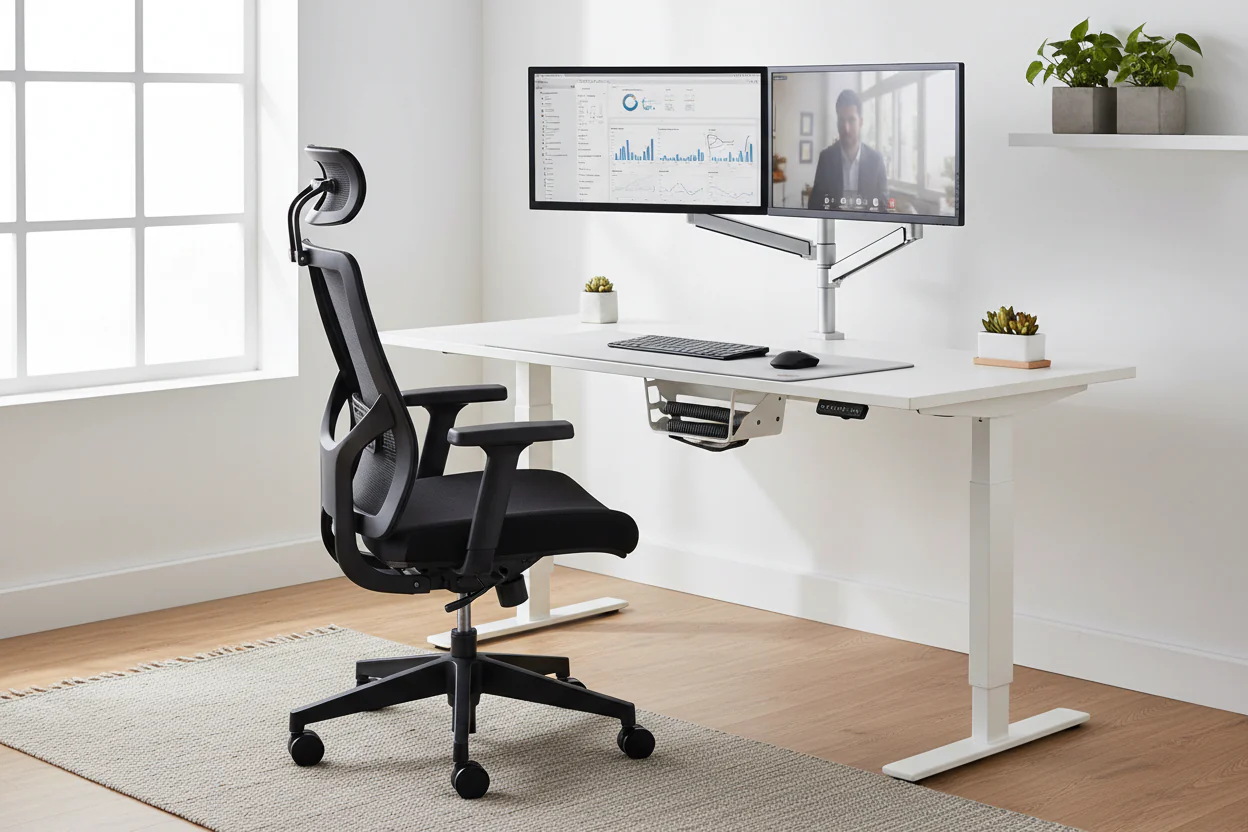
Ergonomic desk setup showing proper monitor height, keyboard position and chair adjustment

Building movement into your workday

Consistency matters more than duration. Short, regular movement breaks outperform occasional long ones for physical comfort over a full day.

Every 30 minutes

A brief posture check — adjust seating, un-clench jaw, relax shoulders. Takes under 30 seconds but prevents accumulation.

Every 60 minutes

Stand, walk to get water, or do 2 minutes of the neck and shoulder sequence. Restores circulation and posture baseline.

Use natural breaks

Tie movement to existing habits — walking to make coffee, standing during phone calls, or stretching before lunch.

Set a quiet reminder

A simple hourly phone or desktop reminder removes the need to remember. Low friction makes the habit more likely to stick.